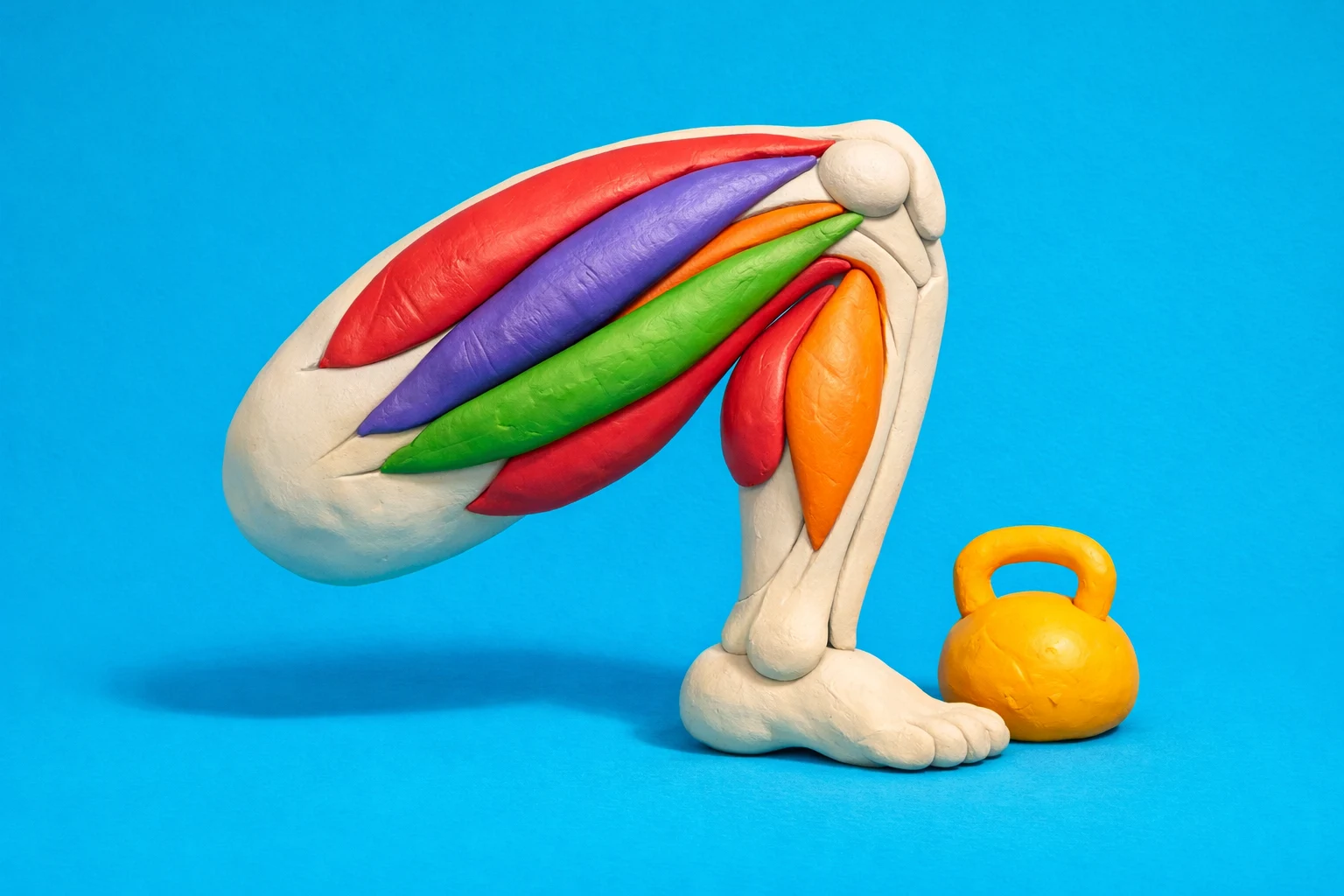
Leg Muscles Quiz
True / False
True / False
True / False
Leg Muscle Anatomy Pitfalls That Break Labeling and Innervation Questions
Most misses on leg muscle questions come from a few repeatable traps. Fix them with a consistent diagram routine and compartment first thinking.
1) Mixing regions: thigh vs anatomical leg
In anatomy, leg means knee to ankle. If a prompt says “anterior leg,” assume the anterior compartment below the knee unless the diagram clearly shows the femur.
2) Confusing tibialis anterior, tibialis posterior, and the fibularis group
- Tibialis anterior: dorsiflexion and inversion.
- Tibialis posterior: plantarflexion and inversion.
- Fibularis longus and brevis: eversion, plus weak plantarflexion.
If the tendon runs in front of the medial malleolus, think tibialis anterior. If it runs behind, think deep posterior structures.
3) Memorizing single muscles without compartment logic
Innervation questions are faster when you classify the compartment first:
- Anterior leg equals deep fibular nerve.
- Lateral leg equals superficial fibular nerve.
- Posterior leg equals tibial nerve.
4) Labeling only the obvious superficial muscles
Gastrocnemius and soleus are easy. Many diagrams test what sits deep to soleus. If you see tendons passing behind the medial malleolus, force yourself to account for tibialis posterior, flexor digitorum longus, and flexor hallucis longus.
5) Rejecting “two action” answers
Biarticular muscles are common. Gastrocnemius plantarflexes the ankle and flexes the knee. Rectus femoris extends the knee and flexes the hip. Treat two actions as a clue, not a red flag.
Printable Lower Limb Muscle Cheat Sheet: Compartments, Actions, and Nerves
Print or save as PDF for quick revision before practicals and labeling stations.
Regional definitions used in exam stems
- Thigh: hip to knee
- Leg: knee to ankle
- Foot: ankle to toes
Leg compartments: muscles, actions, nerve
- Anterior leg (deep fibular nerve): tibialis anterior, extensor hallucis longus, extensor digitorum longus, fibularis tertius. Key actions: dorsiflexion, toe extension, inversion (tibialis anterior).
- Lateral leg (superficial fibular nerve): fibularis longus, fibularis brevis. Key actions: eversion, weak plantarflexion.
- Posterior leg superficial (tibial nerve): gastrocnemius, soleus, plantaris. Key action: powerful plantarflexion (gastrocnemius also flexes knee).
- Posterior leg deep (tibial nerve): tibialis posterior, flexor digitorum longus, flexor hallucis longus, popliteus. Key actions: plantarflexion and inversion, toe flexion, “unlock” knee (popliteus).
Thigh compartments: fast innervation anchors
- Anterior thigh (femoral nerve): quadriceps femoris, sartorius, iliacus. Knee extension is your cue.
- Medial thigh (obturator nerve): adductors. Hip adduction is your cue.
- Posterior thigh (tibial division of sciatic): semitendinosus, semimembranosus, long head biceps femoris. Knee flexion plus hip extension is your cue.
Landmarks that prevent labeling drift
- Tibial tuberosity: orient patellar tendon and anterior tibia.
- Fibular head: points you to the lateral compartment and common fibular nerve region.
- Medial malleolus: behind it run deep posterior tendons (tibial nerve compartment).
- Calcaneal tendon: anchors gastrocnemius and soleus.
Worked Labeling and Innervation Examples for Common Lower Leg Diagrams
Use this step order on any diagram: (1) place landmarks, (2) decide compartment, (3) match tendon path, (4) confirm with action and nerve.
Example 1: Medial ankle labeling with a tendon behind the medial malleolus
- Landmark: identify the medial malleolus and the tarsal tunnel region just posterior to it.
- Compartment call: structures passing behind the medial malleolus belong to the deep posterior leg.
- Action clue: the stem says “plantarflexion and inversion,” plus support of the medial arch.
- Muscle choice: this combination points to tibialis posterior rather than flexor hallucis longus or flexor digitorum longus, which are more directly tied to toe flexion.
- Nerve confirm: deep posterior leg equals tibial nerve.
Example 2: Anterior shin muscle that extends the big toe
- Landmark: find the anterior border of the tibia and the dorsum of the foot.
- Compartment call: muscle belly sits on the anterior leg with a tendon running toward the hallux.
- Action clue: “extends the great toe” is specific.
- Muscle choice: extensor hallucis longus is the single best match, since extensor digitorum longus targets digits 2 to 5.
- Nerve confirm: anterior leg equals deep fibular nerve.
If two answers feel plausible, pick the one with the more specific distal target (hallux vs lateral toes, inversion vs eversion) and then verify the compartment nerve.
Leg Muscles Quiz FAQ: Terminology, Naming, and Diagram Strategy
Why do some questions say “leg” but show the femur and quadriceps?
Many resources use “leg” casually to mean the whole lower limb. In strict anatomy, the leg is knee to ankle, and the thigh is hip to knee. On this quiz, use the diagram boundaries first. If you see the femur or patella with large anterior bellies, you are in the thigh and should think femoral nerve and quadriceps patterns.
Is fibularis the same as peroneus, and will both appear?
Yes. Fibularis longus and brevis are also called peroneus longus and brevis in many atlases. Treat the names as synonyms, then rely on function and location. Lateral compartment equals eversion and superficial fibular nerve.
How can I tell tibialis anterior from tibialis posterior on a labeling diagram?
Use tendon path and surface anatomy. Tibialis anterior sits on the anterior tibia and its tendon crosses the ankle in front of the medial malleolus toward the medial foot. Tibialis posterior is deep in the posterior compartment and its tendon passes behind the medial malleolus, often shown with other deep posterior tendons.
What is the fastest way to answer innervation questions under time pressure?
Do not start by memorizing single muscles. First classify the compartment, then apply the nerve rule: anterior leg equals deep fibular nerve, lateral leg equals superficial fibular nerve, and posterior leg equals tibial nerve. In the thigh, anterior equals femoral, medial equals obturator, and posterior equals sciatic branches.
Which muscles most often have “two joint” actions in answer options?
Watch for gastrocnemius (ankle plantarflexion and knee flexion), rectus femoris (knee extension and hip flexion), and the hamstrings (knee flexion and hip extension). If an option lists two actions that match a biarticular muscle, it is often the best answer.
What should I review if I keep missing diagram orientation and landmarks?
Spend five minutes drilling landmarks before you reattempt questions: tibial tuberosity, fibular head, medial and lateral malleoli, and the calcaneal tendon insertion. If you want extra bone focused practice that supports muscle labeling, use Appendicular Skeleton Bone Anatomy Practice. For general multiple choice elimination technique that helps on close anatomy distractors, use Free MCQ Skills Assessment Practice.
Looking for more? Browse more Education & Academics quizzes on QuizWiz or explore the full QuizWiz workplace quiz library.